What I Actually Do on Every Trip to Feel My Best
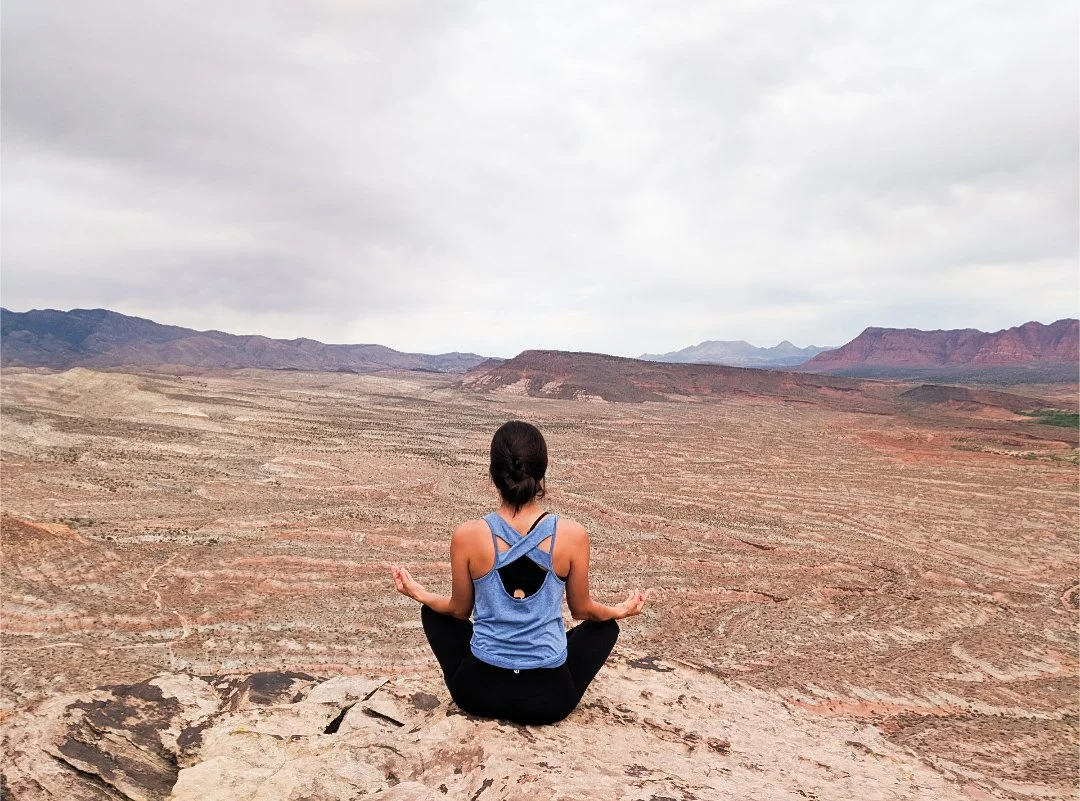
If you’re here, then you already know how much I love to travel — but as someone with a sensitive gut and a tendency to get overstimulated, I’ve learned that feeling good on the road doesn’t happen by accident. Over the years, I’ve fine-tuned a handful of essentials that help me sleep better, ease my symptoms, and stay grounded no matter where I am.
These aren’t fancy or complicated. They’re just the things that make a huge difference in how I feel when I’m away from home. Read below to learn what I actually pack or use on every trip.
The information in this post is for general educational purposes only and should not be interpreted as personalized medical or nutrition advice. Please consult a qualified healthcare professional before making changes to your health or treatment plan.
1. Nerva (Gut-Directed Hypnotherapy App)
As a GI dietitian and yoga teacher, I’m a big believer in the gut–brain connection and how deeply it influences both digestion and mental health. So when I discovered Nerva, a gut-directed hypnotherapy app, I was immediately intrigued.
And if the word hypnotherapy makes you think of someone being “put under” and doing something wild without realizing it — don’t worry, it’s nothing like that. Nerva uses gentle, guided relaxation to help you slip into a calmer, subconscious state where your parasympathetic nervous system (your “rest and digest” mode) can take the lead. In that state, the mind becomes more open to suggestions that support healthier gut-brain signaling.
Nerva is designed specifically for people with IBS, and the research behind it is pretty incredible — six weeks of Nerva has been shown to be just as effective as the low FODMAP diet for reducing symptoms.
Personally, I use it for both my IBS symptoms and my sleep. I listen almost every night as part of my wind-down routine, and it helps me drift off so much easier. I also use it on long flights when I want to rest or reset my nervous system. It’s truly some of the best “brain rest” I’ve ever experienced. I genuinely think this app is magical.
Note: Gut-directed hypnotherapy is not recommended for individuals with a history of unresolved psychological trauma or post-traumatic stress symptoms.
How I use it while traveling:
Before sleeping in a hotel room
During long flights with headphones
For a reset if I am feeling mentally fatigued
2. Bring a foldable Travel Yoga Mat
I’ve been practicing yoga for 15 years, yet for some reason it took me fourteen of those years to finally buy a travel yoga mat. I truly don’t know why I waited so long — it’s been such a game-changer for staying active and grounded while I travel.
For my bachelorette yoga retreat, I bought myself and my group travel mats, and ever since then, mine has become a non-negotiable. It goes with me on every trip now.
I use the Manduka eKO® Superlite Travel Yoga Mat, and I love it. It folds up neatly and fits easily in both a carry-on and checked luggage, and the grip is surprisingly good — even for longer flows or hotter classes. I use it in hotel rooms when I don’t have time to take an in-person class, and I’ll also layer it over a studio’s rental mat if I do make it to a class.
It helps me keep up with gentle movement wherever I am, which makes a noticeable difference in how my gut and my body feel throughout a trip.
My go-to online yoga studios:
Commune - I love Schulyer Grant or Nikki Vilella’s classes
3. Use Peppermint Oil
Peppermint oil is one of my go-to remedies if I have upper-GI discomfort, bloating, or those sudden digestive cramps that love to show up mid-trip. It has been shown to improve abdominal pain in patients with IBS when compared to a placebo. There are many variations on the market, but two of the ones I use are IBGard and FDGard. I use IBGard when I have lower gut symptoms, and FDGard for upper GI issues like fullness, nausea, or discomfort after meals.
Some things to note:
Peppermint oil can relax the smooth muscles in the esophagus, so some patients with heartburn or GERD may experience an increase in symptoms. If the product is enterically-coated (meaning it is within a capsule that should withstand breakdown by acid in the stomach), it may help reduce these symptoms, but that is not always the case for some of the patients I work with. Speak to your healthcare provider before trying this product.
IBGard and FDGard work best when taken 30-60 minutes prior to meals.
4. Stay Hydrated
Travel dehydration is real. Between flying, walking everywhere, sweating through hot destinations, and simply forgetting to drink water in new time zones, it’s easy to fall behind on fluids. As someone who manages constipation and migraines, I’ve learned that staying hydrated is one of the most important things I can do to feel my best on a trip.
One of the first things I do at the airport is buy the largest water bottle I can find. And no — I don’t pack a reusable one. I know that might be surprising, but I genuinely don’t enjoy the taste of most airport filtered water. Instead, my home airport (LAX) sells aluminum bottles, and I’ll reuse that same bottle throughout the entire trip.
Once I arrive at my destination, I make a point to identify my water source early. If the hotel doesn’t offer complimentary water, I’ll stop by a local store and pick up a couple of large jugs to keep in the room. It makes it easy to hydrate first thing in the morning, refill my bottle as I get ready, or sip throughout the day when I’m relaxing at the hotel.
5. Use an Eye Mask
Sleep is one of the biggest factors in how I feel and enjoy a trip — and the further I travel, the harder it can be to get quality rest. That’s why I always bring an eye mask. It’s simple, but it makes a huge difference: I fall asleep faster in unfamiliar hotel rooms, bright city settings, or Airbnbs with questionable curtains.
An eye mask is also key for getting the most out of naps or a Nerva session, helping me fully relax and reset my nervous system. I use a very basic, lightweight mask I found on Amazon — nothing fancy, but it gets the job done every time.
Final Thoughts
These little tools help me stay connected to my body, support my gut, and enjoy the places I’m exploring.
If you want a part two — maybe my gut-friendly snacks list or travel wellness hacks— let me know!